
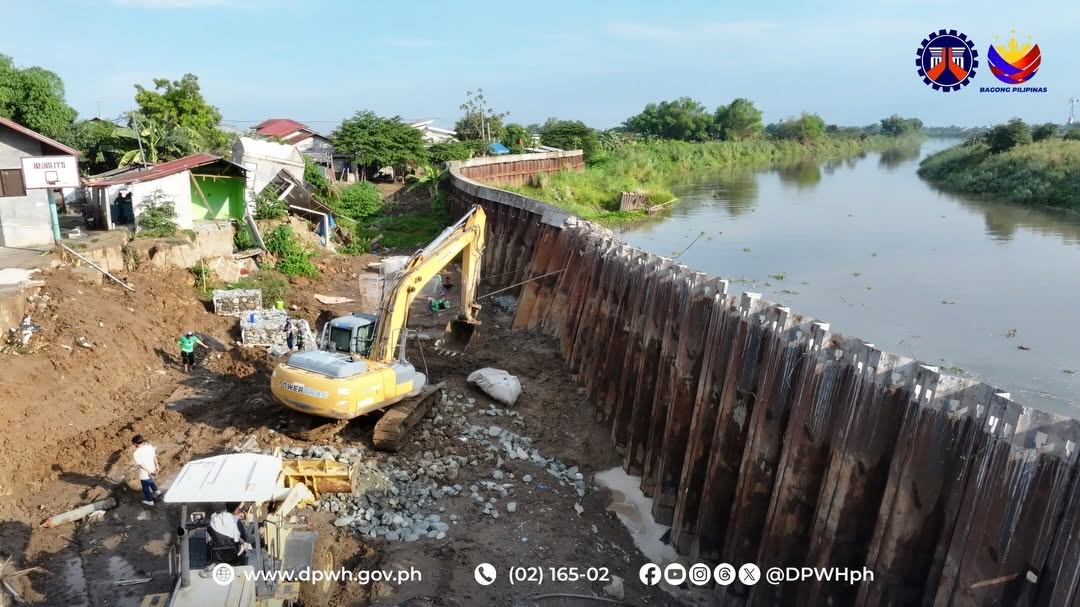
PAMPANGA — The Department of Public Works and Highways (DPWH) is set to roll out a series of upstream flood-control interventions along the Pampanga River, aiming to reduce long-standing flooding risks in vulnerable communities across the province.
Public Works Secretary Vince Dizon confirmed on Friday that the projects are part of a broader national strategy to strengthen flood mitigation systems in major river basins, following directives from President Ferdinand R. Marcos Jr. to prioritize long-term water management solutions in flood-prone regions.
Dizon said the initiative focuses on addressing water flow issues at the upstream sections of the Pampanga River, where runoff and accumulation have been identified as contributing factors to downstream flooding.
“Based on the President’s directive, we need to create solutions upstream. We have five dams and detention basins that will be built upstream for 2027,” Dizon said in a statement.
He added that managing water flow at the source is expected to significantly reduce pressure on downstream communities. “This will help a lot because up there, the flow of water is being blocked,” he said.
The planned infrastructure includes the construction of five dams and detention basins scheduled for completion in 2027. These facilities are designed to regulate excess water during heavy rainfall and typhoon events, which frequently trigger flooding in central Luzon.
In addition to the large-scale upstream structures, the DPWH is also accelerating localized river protection works. These include the installation of gabions in Barangay Candating and 24-meter sheet piles in Barangay Cupang. Both interventions are intended to reinforce riverbanks and minimize erosion along critical sections of the Pampanga River system.
According to the DPWH, these efforts are expected to directly benefit flood-prone areas in Arayat, as well as neighboring municipalities including Mexico and San Fernando, where seasonal flooding has repeatedly disrupted livelihoods, transportation, and local economic activity.
Dizon conducted an on-site inspection of ongoing flood-control projects in Pampanga on Friday, accompanied by Pampanga Vice Governor Dennis “Delta” Pineda. The visit formed part of the agency’s monitoring of infrastructure progress in high-risk areas.
Authorities emphasized that the Pampanga River basin remains one of the country’s most flood-prone systems due to its wide catchment area and susceptibility to intense rainfall brought by tropical cyclones and the southwest monsoon. Over the years, repeated flooding has caused agricultural losses, displacement of residents, and damage to infrastructure across central Luzon.
The DPWH said the upstream approach is intended to complement existing downstream flood defenses, creating a more integrated water management system that reduces overflow before it reaches populated areas.
Officials also underscored that the success of the program will depend on sustained coordination between national agencies, local government units, and engineering teams overseeing river basin management.
While no specific start date for full construction was provided, the agency indicated that preparatory works and initial implementations are expected to begin soon as part of the phased development plan.
The project is part of the government’s broader infrastructure and climate adaptation agenda, which aims to strengthen resilience against increasingly severe weather events affecting the Philippines, one of the world’s most disaster-prone countries.
Once completed, the upstream interventions are expected to form a critical component of Pampanga’s long-term flood mitigation strategy, reducing the frequency and severity of inundation in surrounding communities.