
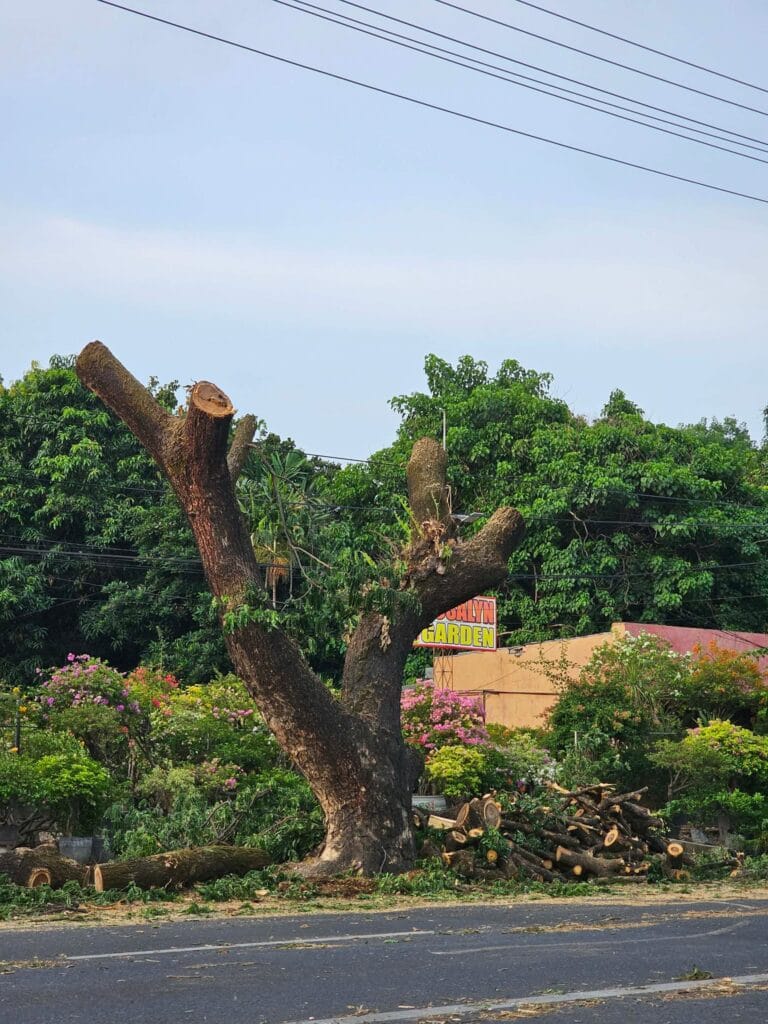
PAMPANGA, Philippines — The SAVE The TREES Coalition has called on local authorities and environmental agencies to review recent tree-pruning activities along the Fil-Am Friendship Highway, raising concerns that some of the work may have gone beyond what is necessary for public safety and road maintenance.
In a statement, the coalition said several roadside trees appeared to have been heavily trimmed, describing the pruning as excessive and potentially harmful to the long-term health of the trees.
Authorities have previously cited public safety and traffic concerns as reasons for pruning roadside vegetation. However, the coalition argued that while pruning is a recognized and necessary practice in urban tree management, removing large portions of a tree’s canopy could undermine its health and environmental benefits.
According to the group, proper pruning is intended to remove dead, damaged, or hazardous branches while preserving the tree’s overall structure. The coalition pointed to existing guidelines, including provisions under Department of Public Works and Highways (DPWH) Department Order No. 93, Series of 2014, which outlines standards for roadside tree maintenance.
The coalition said the guidelines generally recommend limiting the removal of living branches and preserving a significant portion of a tree’s crown to maintain its health and stability. It also cited internationally recognized tree-care standards, including the ANSI A300 standards, which provide guidance on pruning, risk assessment, and tree preservation.
Environmental advocates note that trees play a significant role in urban environments by providing shade, reducing heat buildup, absorbing carbon dioxide, filtering pollutants, and helping manage stormwater runoff. Significant canopy loss, they say, can reduce these environmental benefits and affect a city’s resilience to extreme weather conditions.
The SAVE The TREES Coalition further argued that excessive pruning may weaken trees, slow their recovery, and potentially increase their vulnerability to disease and structural instability over time.
The affected trees are part of a corridor known for its mature tree cover, with the coalition noting that some of the trees in the area are protected under existing environmental measures, including an Environmental Protection Order (EPO).
The group is urging local government units and relevant agencies to conduct a transparent review of the pruning activities, disclose the basis for identifying hazardous branches, and ensure that future maintenance efforts comply with both local regulations and recognized arboriculture standards.
The coalition emphasized that public safety and environmental protection should not be treated as competing priorities, but rather as objectives that can be achieved through science-based and sustainable tree management practices.
As of posting, no official response has been issued by the agencies involved regarding the concerns raised by the SAVE The TREES Coalition.