


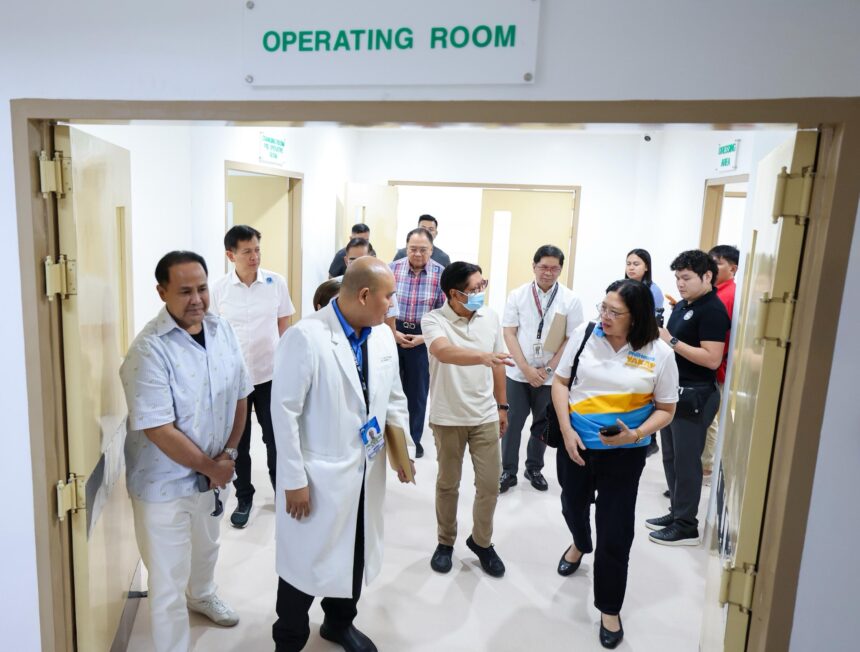
President Ferdinand “Bongbong” Marcos Jr. visited and inspected the Pampanga Provincial Hospital–Clark on Thursday, May 14, 2026, as part of the government’s push to strengthen public healthcare infrastructure in Central Luzon.
The visit highlighted the newly completed state-of-the-art government hospital located inside the Clark Freeport Zone, which is expected to expand access to affordable and quality medical services for residents of Pampanga and nearby provinces.
The inspection was joined by Pampanga Governor Lilia “Nanay” Pineda and Vice Governor Dennis “Delta” Pineda, along with local officials and representatives from key national agencies involved in the project.
According to provincial information, the hospital features a 143-bed capacity and is equipped with modern diagnostic and treatment facilities, including CT scan and X-ray machines, mammography services, as well as intensive care (ICU) and neonatal intensive care (NICU) units. It also offers specialized services in obstetrics and gynecology, among other medical departments.
The facility is designed to accommodate both general and specialized healthcare needs, with services aimed at early diagnosis and preventive care, particularly for low-income patients who require accessible medical support.
Governor Pineda emphasized during the visit the importance of strengthening early detection programs to help reduce the progression of serious illnesses, noting that preventive healthcare remains a key priority for the provincial government.
During the inspection, President Marcos also interacted with healthcare workers and patients inside the facility, observing hospital operations and service delivery.
The Pampanga Provincial Hospital–Clark is projected to serve not only local residents but also the estimated 151,000 workers and thousands of locators operating within the Clark Freeport Zone, according to the Clark Development Corporation.
Officials say the facility represents a major step in expanding government health services in Central Luzon, with the goal of improving access to modern medical care while easing the burden on major regional hospitals.