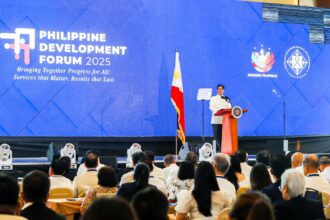



GYEONGJU, South Korea—In a direct appeal to the world’s economic powerhouses, Philippine President Ferdinand R. Marcos Jr. delivered a sharp warning from the APEC summit stage on Friday: The international trading system is at risk of collapse, and only a fully functioning World Trade Organization (WTO) dispute court can save smaller nations from being trampled.
Speaking at the Asia-Pacific Economic Cooperation (APEC) Economic Leaders’ Meeting, Marcos framed the issue not as a legal technicality, but as an existential threat to development.
“Without a functioning dispute settlement mechanism, small economies would be at a disadvantage,” Marcos stated. His message was clear: for developing nations like the Philippines, the WTO’s rulebook is a fundamental defense. “For small economies, rules are a potent equalizer.”
⚖️ The Broken ‘Supreme Court’ of Global Trade
At the heart of the crisis is the WTO’s Appellate Body, which serves as the final arbiter for trade disputes. Since late 2019, the body has been effectively paralyzed, lacking the necessary quorum of members to hear appeals—a situation brought on by the blocking of new judicial appointments.
Marcos urged APEC leaders to make the full restoration of this mechanism a top priority, stressing its necessity for upholding fairness, transparency, and openness across the global trading sphere.
🚀 Adapting to the Digital Era
The Philippine leader’s call was not just about restoring the past; it was also about building the future. He challenged APEC members to advance new, forward-looking trade disciplines that directly address 21st-century realities.
Specifically, Marcos championed international discussions on:
- E-commerce and Digital Trade
- Investment Facilitation for Development
- Services Domestic Regulation
These reforms, he argued, are crucial to making trade more inclusive and responsive to the rapid pace of technological change and global digital transformation. He added that the Philippines continues to push for stronger negotiations on agriculture and fisheries to bolster food security and sustainability in the region.
The President concluded with a unifying message on regional cooperation: “Through deeper regional economic integration, we can help each one of us – large or small – adapt, innovate, and prosper together.”
Marcos’s impassioned plea underscores a growing global concern that without a strong, rules-based system, global commerce risks descending into a free-for-all, where economic might, not agreed-upon principles, dictates the terms of trade.